Maintaining or re-establishing a biological balance can help crops survive and/or thrive in their natural environments. It may be the unintended consequences of the inputs and practices employed over decades that have disrupted the balance. Looking at the modes of biological action that act as protection for the plants, we can see a potential benefit to encouraging those natural processes.
Competitive Exclusion One organism creates an unwelcoming environment for another, effectively excluding the second organism from becoming established without directly killing it. An example of this would be creating a film on a root surface to prevent pathogens from infecting the plant.
Production of Natural Antibiotics The secondary metabolites that contribute to plant health and nutrient density.
Bio-Sanitation
Some microbes (gram-positive bacteria) consume pathogens (like botrytis and anthracnose) as a food source as seen on leaf surfaces and orchard floors.
Induced Systemic Resistance (ISR)
Stimulating plant response to disease pressure before actual diseases are detected. This results in strengthened plant defenses, helping prevent the onset of actual disease when it is imminent.
BIOACTIVE™ LiquiLife and LiquiLife+ are a proactive/protective approach to plant health, not curative. Timing and observational farming can help reduce the rates and frequency of fungicide applications; over time and in some cases, allowing the grower to get through the season without using them.
Without a good microbial habitat, you lose the soil particle aggregation microbes provide. Diminished soil structure decreases soil respiration and oxygen availability for seeds and plants. This results in reduced seed/soil contact, seed hydration, and reduced germination rates in the spring. Diminished aggregation reduces water infiltration and water holding capacity. This takes much of the resilience out of the farming system. Over time, and without a good habitat for biology, the microbes you count on to mineralize, solubilize, fix, chelate, protect, and actively deliver macro and micronutrients to your crops no longer function well in your soil. As this downward trend continues, farmers become more reliant on purchased fertilizers and the next more expensive generation of crop protection inputs.
Scott Veendenhall and Skip Grosskreutz from Clear Lake, WI talk about their success in eliminating white mold by applying LiquiLife (formerly CX-1) to their corn and soybeans in this crop resiliency video.
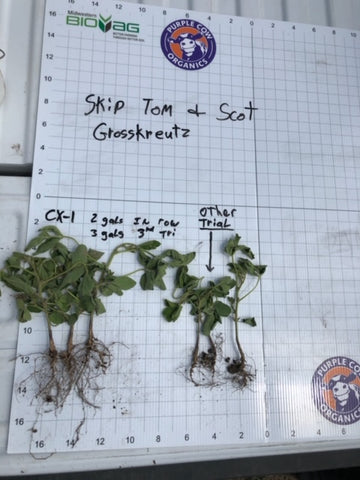
Remember our broad-spectrum biologicals, LiquiLife and LiquiLife+, are not a fungicide, they are not killing things; but rather promote a healthy balance of natural, authentic biology that, in nature, keeps things in check.
Here are a few more field observations of our customers utilizing BIOACTIVE™ and noticing improvements in crop resiliency.
While not a fungicide, BIOACTIVE™ LiquiLife and LiquiLife+ have proven with many growers to be key drivers for crop resiliency. By encouraging health biology, crops can tap into their natural resiliency against infections and diseases. A broad-spectrum biological will not cure your plants but can lead to a more successful season of fighting off these common issues.
Schedule a field consultation or get practical tips to improve soil health, efficiency, and yield.